
Recreate Your Past
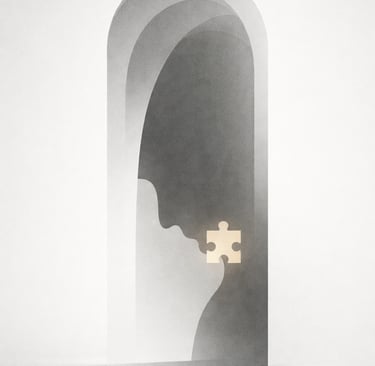
The future often feels unbearable not because it’s unknown, but because an old interpretation is still running the story. This reflection turns your attention toward the meanings you’ve attached to what happened: how a single season of fear, shame, or doubt can harden into identity, and how quietly powerful it is to question that inheritance. Recreating the past doesn’t deny the storm; it corrects the distortions it left behind, restoring the routes you survived and the strength you overlooked. When the story shifts from verdict to guidance, a different kind of hope returns. It’s less like wishing and more like reclaiming. #ReframingThePast #InnerAuthorship #OpenMindedLiving #SelfDiscoveryJourney #EmotionalClarity #ResilientIdentity #QuietHope #IntentionalLife
MINDSETACTION

1/12/26
Recreate Your Past
“It’s not a question of hope in the future. It’s a question of recreating your own past.”
- Paulo Coelho, The Fifth Mountain
There are moments when the future feels heavy to look at. Uncertain. Too far away. You may find yourself thinking, I just need more hope, or I’ll feel better once things change.
But sometimes what’s weighing on you isn’t the future at all. It’s the past. How you’ve interpreted it, carried it, and allowed it to define who you believe you are today.
This week’s reflection isn’t about forcing optimism. It’s about reclaiming authorship.
Your past is not just a collection of events. It’s a collection of meanings you assigned to those events.
And meanings can change.
The Story We Tell Ourselves
Imagine two people who experience the same setback. One walks away thinking, This proves that I wasn’t meant for more. The other thinks, This taught me what I needed to learn for what’s to come.
The difference isn’t luck or personality. It’s interpretation.
Over time, these interpretations harden into identity:
“I always quit.”
“I’m not consistent.”
"I'm not good enough."
“I missed my chance.”
“I’m a failure.”
But these are not facts. They are stories that we tell ourselves, often written in moments of pain or confusion.
Recreating your past means questioning those stories, reflecting on lessons and reframing your past.
A Simple Metaphor
Think of your past like a map drawn during a storm. The landmarks are real. But the distortions are not. Fear exaggerates distances. Shame erases the paths that you actually survived. Self-doubt redraws borders that were never permanent.
Recreating your past doesn’t erase the storm. It redraws the map. This time in service of becoming who you’re meant to be.
Why This Changes the Future
When you revisit your past with open-mindedness and curiosity, something begins to shift:
What once felt like doom reveals itself as guidance
What looked like mistakes carries hidden insight
What seemed like detours becomes self-discovery
What we call doubt ripens into awareness
What felt hopeless quietly returns as hope
And then:
You begin to feel unstuck
The past no longer defines you
Your story shifts from injury to intention
You remember that your life is still yours to shape
Integrating This in the Days Ahead
Identify one story you repeat about yourself
Write it down exactly as you think it.Ask where that story came from
One event? One season? One version of you?Reframe it without denial
Replace “This ruined me” with “This shaped me and taught me.”Extract the lesson you earned
What skill, awareness, or resilience did this experience give you?Act from the new interpretation
Take one small step this week as the person who learned, not the person who failed.
Reflection
You don’t need to manufacture hope for some distant future.
You don’t need to become someone new.
You only need to look back with clearer eyes and more expansive reflection.
This week, let yourself rewrite the meaning of what came before.
The moment that you do, the path ahead will feel lighter. Not because it’s easy, but because you decided to recreate your past. And because you chose not only the meaning of your past, but also how you allow the past to affect you.
Storyteller
Paulo Coelho (1947–2023) was a Brazilian author best known for The Alchemist and The Fifth Mountain, works that explore purpose, resilience, and the inner journey of transformation. His writing consistently emphasized personal responsibility, spiritual courage, and the idea that meaning is shaped by how we interpret our experiences. This quote reflects his core belief that growth begins not by escaping the past, but by understanding and reframing it with wisdom.
Reflect
Empowering you to live your authentic life.
Journey
asaunlimitedsoul@gmail.com
© 2024. All rights reserved.