
Stop Fighting Battles That Only Exist in Your Head
Most of the battles that drain your energy, steal your confidence, and hold your life hostage never happen anywhere except inside your own mind. Seneca’s timeless reminder, “We suffer more often in imagination than in reality,” calls us to stop letting fear-fiction dictate our choices. When you break free from the invisible prison built from old warnings, imagined disasters, and self-protective stories that no longer serve you, you reclaim your power to act, try, grow, and live boldly. This post shows how ancient wisdom and modern experience converge on one truth: most of what scares you isn’t real. But your potential absolutely is. #AuthenticSoulAwakened #MindsetShift #SenecaWisdom #MentalFreedom #LiveBoldly #LetGoOfFear #InnerStrength #PersonalGrowth
ACTIONINNER HARMONYCOURAGE
12/1/25
Stop Fighting Battles That Only Exist in Your Head
“We suffer more often in imagination than in reality.”
- Seneca
Most of what scares you isn’t real. And many of the things that keep you up at night will never actually happen.
I spent years playing out imaginary disasters in my head, talking myself out of opportunities, and stressing myself out over events that would never occur.
When I was growing up, I was told to be safe: don’t make waves or attract too much attention to yourself, don’t take risks or unnecessary changes, get a stable job instead of following your passion. And whatever you do, make sure that you are safe: emotionally, physically, financially, socially.
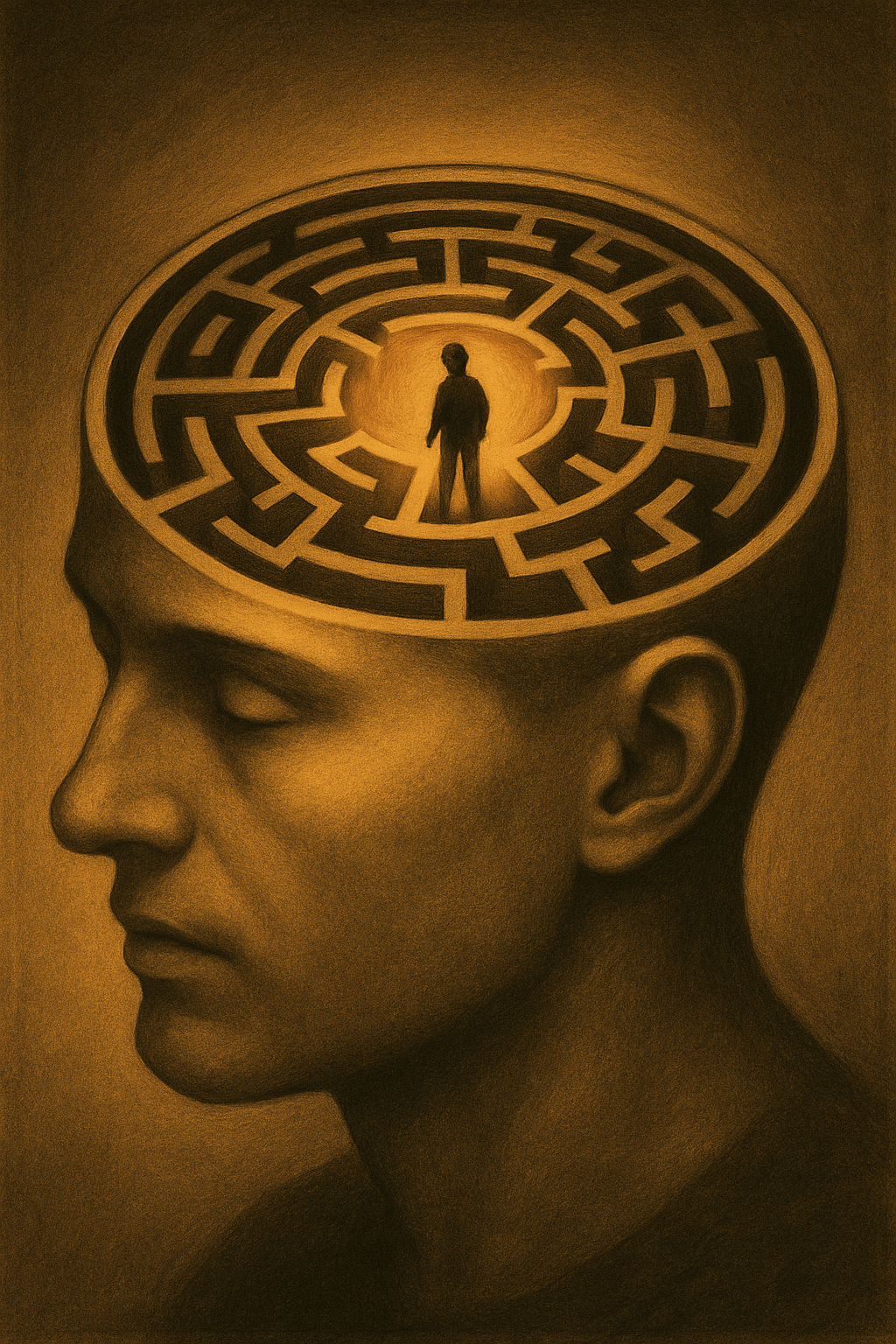
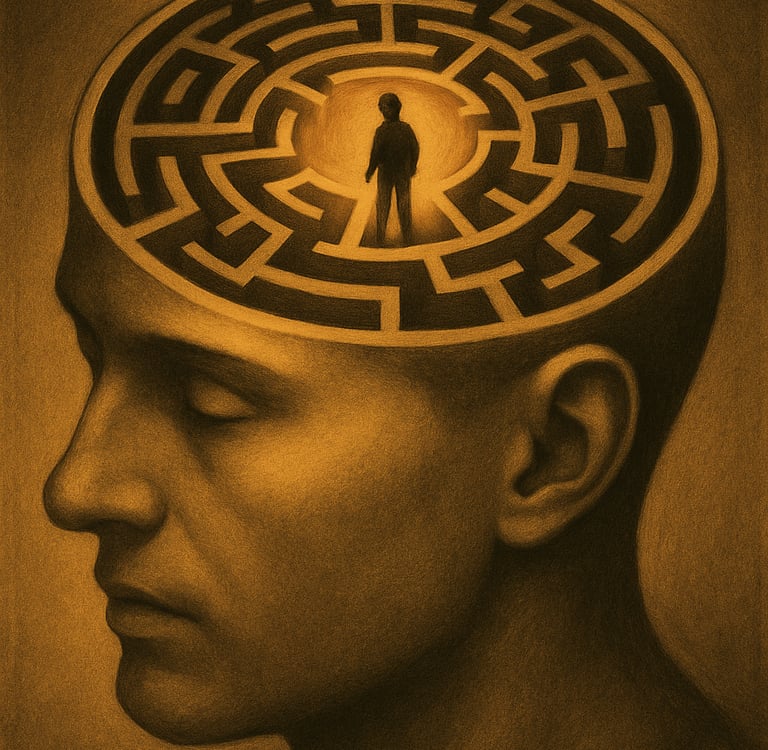
One of the toughest prisons that you can encounter is the one that you build yourself. It’s built from the stories your mind writes about a future that hasn’t happened yet.
And while nobody in my life handed me that truth, someone two thousand years ago did. His name was Seneca.
The Ancient Insight We Still Desperately Need
In Letter 13 of his “Letters to Lucilius”, Seneca wrote this line as a coaching message to his friend.
He wanted Lucilius to understand a simple but profound truth: Your imagination can become your greatest enemy if left untrained.
Seneca saw how humans create suffering by:
Inventing worst-case scenarios
Exaggerating the dangers ahead
Replaying fears that never materialize
Shrinking under imagined criticism
Living in the shadow of problems that do not exist
His message was clear:
What we imagine in our mind is almost always worse than what actually happens.
A huge amount of the stress that you carry: that knot in your stomach, the replaying of conversations, the dread about futures that don’t exist yet, you created it in your own mind.
But if you created it, you also have the power to rewrite it.
Most people aren’t held back by real, tangible problems. They are held back by the illusory storms that they have rehearsed in their heads. Things like:
Overthinking
Trying to keep everyone happy
Worrying about being judged
Old emotional habits from childhood
Imagining failure before ever trying
Expecting rejection
Preparing for the worst out of “self-protection”
We get so good at building mental cages that we don’t even notice that we are our own jailers, the ones that are locking the door. And once you start seeing danger behind every corner, life stops feeling like a wide-open road of adventure and starts feeling more like a maze and a trap.
Still, it is a maze that we can escape.
The Interview That Never Happened
Olivia was the kind of person everyone quietly relied on. She was smart and steady, the one who always delivered. When a supervisor role opened up at her company, people kept telling her, “You’d be perfect for it.” And it was a role that she wanted. She spent weeks preparing: polishing her portfolio, practicing answers on her commute, even running mock interviews with a friend.
But on the morning of the real interview, something shifted.
The questions started creeping in:
“What if they realize I’m not as capable as they think?”
“What if I freeze up?”
“What if the director asks something I can’t answer?”
“What if I make a fool of myself?”
Before she knew it, she wasn’t imagining an interview. She was imagining a disaster. Her chest tightened. Her palms got clammy. She felt that familiar swirl of heat in her face, the kind that shows up right before tears or panic.
Instead of breathing through it, she opened her laptop and sent a hasty email. One that she later regretted. In the email, she apologized and withdrew from the interview.
Here’s the part she that didn’t know until later:
Her resume had impressed the entire panel.
They had already shortlisted her as a top candidate.
Two managers had even marked her as their first choice.
The opportunity was there for her. Open and wide.
But her imagination, that had run wild and stirred her worst fears, caused her to lose her chance.
We’ve all had an Olivia moment: that point where we step back not because of what is, but because of what we’re afraid might be. And that’s why Seneca’s ancient reminder lands so sharply even now.
It’s not philosophy.
It’s a mirror.
The Mind Trap
When your imagination runs wild, it can become a director staging horror films inside your head. When it does, the following can occur:
Overthinking:
You rehearse failure
You replay fears
You analyze every possible mistake until you paralyze yourself
But none of it exists outside your mind.
People-Pleasing
You contort your life to avoid disappointing others
You imagine they’re judging you, even during moments when they’re not thinking about you at all
The suffering is imaginary, but the emotional exhaustion is real.
Fear of Judgment
You dim your voice to avoid ridicule
You step back from opportunities because you “might” be criticized
Most of the time, no judgment ever occurs.
And this is where Seneca’s ancient wisdom echoes across centuries: Your mind creates storms the world never intended.
Breaking the Spell
When anxiety spikes, when “what ifs” start spiraling, when your imagination turns into a factory of fear, use this simple grounding technique. It’s fast. It’s powerful. And it can reboot your clarity.
1st Minute: Identify the Story
Ask aloud or write: “What am I imagining right now?”
Examples:
“I’m imagining my friend is upset with me.”
“I’m imagining failing this project.”
“I’m imagining everyone noticing my mistake.”The moment you name the story, its power begins to fade.
2nd Minute: Verify the Facts
Ask: “What do I actually know to be true in this moment?”
This step is the shock absorber. It cuts anxiety by revealing how much of your suffering is guesswork.
3rd Minute: Choose One Real Step
Ask: “What is one concrete action I can take right now?”
Real actions dissolve imagined suffering:
Send the message.
Clarify the misunderstanding.
Set a boundary.
Start the task.
Take the first step.
Reality is solvable. Imaginary fear isn’t.
It is often helpful to remember:
Most limits are illusions.
Most barriers are mental.
Most fears are unverified.
Once you learn to separate imagination from reality, you unlock:
Clarity that cuts through confusion
Courage to take the next step
Confidence to be your authentic self
Calm that replaces old stress patterns
Momentum that carries you toward your purpose
You stop living in fear of ghosts and begin living in alignment with your truth.
You step out of the shadows and into possibility.
You stop waiting for life to happen and start shaping it.
This is how you become unstoppable.
Philosopher and Statesman
Lucius Annaeus Seneca (4 BC – AD 65) was a Roman philosopher, statesman, and playwright, one of the central figures of Stoicism. His teachings focused on emotional mastery, perspective, courage, time, and resilience. Though he lived nearly two millennia ago, his insights remain astonishingly relevant, offering practical tools to reclaim your mind, strengthen your character, and live with intention.
Reflect
Empowering you to live your authentic life.
Journey
asaunlimitedsoul@gmail.com
© 2024. All rights reserved.