
The Fate You Wield
It is tempting to mistake the circumstances we are handed for the entirety of our story, allowing the concept of fate to quietly become an excuse for surrender. Yet the raw material of our lives, our unspoken setbacks, inherent gifts, and unavoidable hardships, holds no definitive power until we decide how to carry it. True agency emerges not from questioning what we have been given, but from cultivating the steady courage required to wield it with purpose. The transformation of pain into wisdom and uncertainty into forward motion ultimately rests in our own hands, waiting only for us to step fully into the narrative. #PersonalAgency #QuietCourage #ReflectiveLiving #InnerStrength #PurposefulAction #NarrativeShift #SelfAwareness
MINDSETACTIONCOURAGE
June 1, 2026
The Fate You Wield
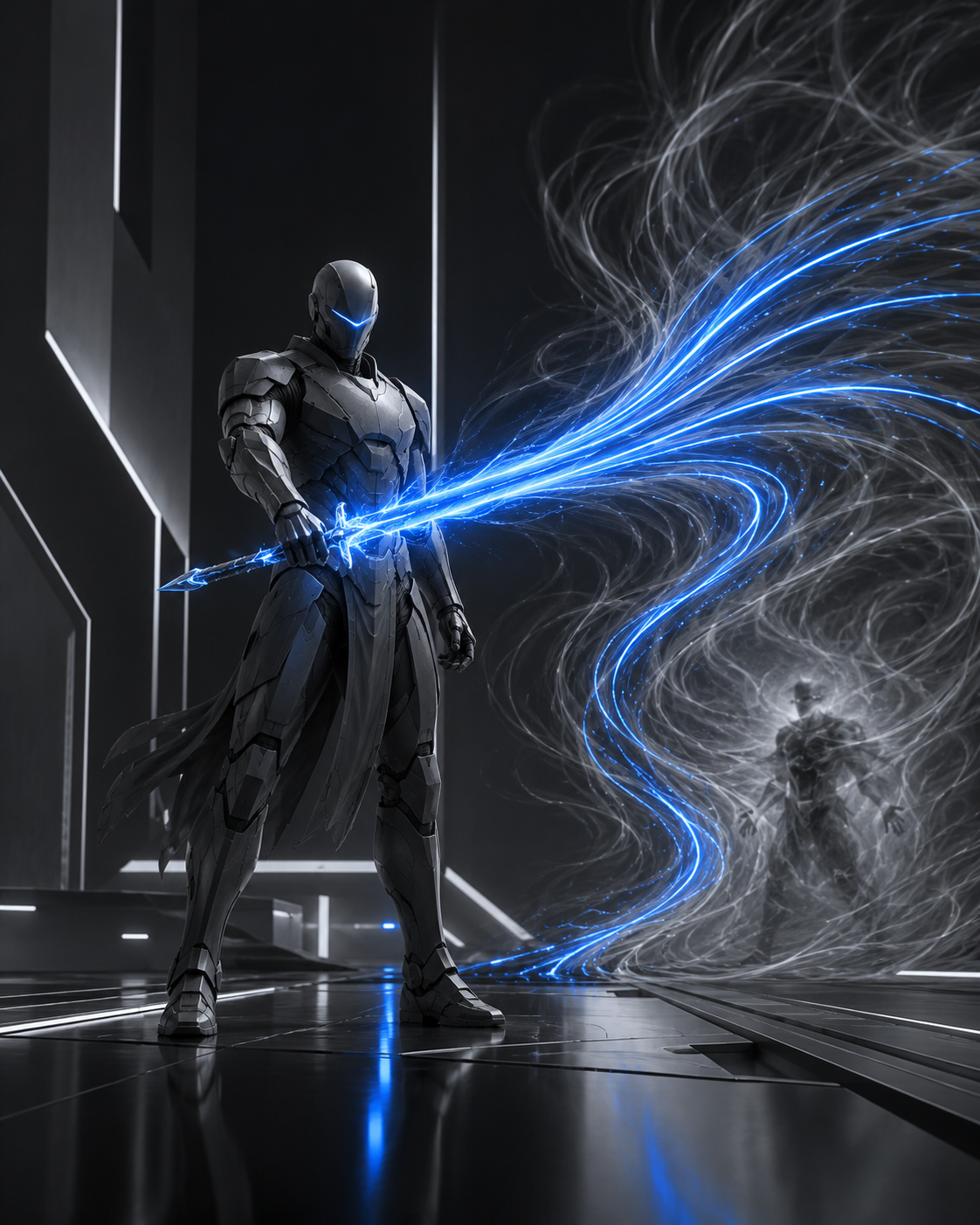
“Fate is like a sword. Useful only to those who can wield it.”
- FX’s Shōgun, Season 1, Episode 7: “A Stick of Time”
There are moments in life when we look at our circumstances and wonder whether our path has already been decided for us.
A setback happens. A door closes. A relationship changes. Plan take longer than expected. And we begin to question: It this just fate? Should I even try?
Fate may place something in your hands, but it does not dictate what you do with it.
Fate Is Not Helplessness
It is easy to confuse fate with surrender.
We say, “Maybe it just wasn’t meant to be,” when something becomes difficult. We tell ourselves, “This is just my situation,” when we feel stuck. Sometimes those statements bring peace. But sometimes they become a quiet excuse to stop participating in our own lives.
Fate is not merely something that happens to you. It can also be something that you shape through awareness, courage, patience, and discipline.
A sword has weight. It requires training. In careless hands, it can become dangerous. In fearful hands, it may never be used. But in steady hands, it becomes a tool of protection, direction, and purpose.
Your life is similar. Your past, your gifts, your disappointments, your personality, your opportunities, and your limitations only become powerful when you fully embrace them and wield them with purpose.
Your Choice
Everyone is handed something different.
Some people are handed confidence early. Others are handed hardship. Some are handed support. Others are handed loneliness. Some are given clarity. Others have to fight through confusion before they find their way.
The question to ask yourself is not, What was I given?
The question to ask yourself is: What am I going to do with it?
Maybe your pain can become wisdom instead of bitterness.
Maybe your uncertainty can become curiosity instead of paralysis.
Maybe your discipline can become freedom instead of self-punishment.
The same experience can shrink one person and sharpen another. Not because one is “chosen” and the other is not, but because one learns how to hold what they have been given differently.
Adjusting the Sail
Fate is like the wind at sea.
Some days it comes gently. Some days it arrives as a storm. Some days it disappears completely, leaving the water still and silent. No sailor controls the wind, but a skilled sailor learns how to read it, adjust the sail, and keep moving with what is given.
An untrained sailor curses the wind when it changes. A reckless one lets it throw the boat off course. But a wise sailor studies its direction, respects its force, and uses it to move toward their destination.
Life works the same way. You may not control every condition around you. You may not choose every delay, disappointment, opportunity, or turning point. However, you can learn to adjust the sails in your life, steer your ship through any storm, and achieve what you desire.
Fate may bring the wind. But it’s your mindset that determines whether it becomes resistance, chaos, or momentum.
Skill Matters More Than Circumstance
A sword does not make someone a warrior. Practice does.
In the same way, a dream does not make someone purposeful. Consistency does. Talent does not make someone fulfilled. Devotion does. A hardship does not automatically make someone wise. Reflection does.
You do not need perfect conditions to begin. You don’t need to feel fully ready. And you don’t need every answer before taking the next step.
But you do need the right mindset. And you must cultivate the strength to master the fate you are asking for.
If you want more opportunity, build more capacity
If you want deeper relationships, build more honesty
If you want more peace, build better boundaries
If you want a meaningful life, build the courage to live by your values when it would be easier not to
Fate deals the circumstances, but you are the architect of the outcome.
Wielding Fate
One story that exemplifies this is Miyamoto Musashi’s duel with Sasaki Kojirō. In 1612 Musashi was on his way to an island where he was to duel with the famed Kojiro. Knowing that Kojirō wielded a notoriously long greatsword and utilized a deadly technique called the "Swallow Cut," Musashi realized his standard steel katana was too short and would force him into his opponent's lethal striking range. To overcome this disadvantage, Musashi used his boat ride to the island to carve a heavy wooden bokken from a spare oar, purposefully crafting it to be just inches longer than Kojirō's formidable blade. After arriving intentionally hours late to infuriate Kojiro, Musashi faced the enraged and emotional Kojirō, perfectly timing his counterstrike to evade the blade while delivering a single, crushing blow with his wooden oar from safely outside Kojirō's maximum reach.
We often mistake fate as an edict, a period or exclamation point at the end of a chapter in our life, a script written for us that we are forced to accept. Events may happen in our life, but the outcome is still in our hands. One person that perfectly illustrates this is Károly Takács. In 1938, the Hungarian army sergeant was favored to win the Olympic gold in pistol shooting. Then a tragedy struck. A defective grenade exploded and completely shattered his right hand. Fate had effectively severed his dream. But Takács refused to let the circumstance dictate his ending. In total secrecy, he spent many months painstakingly teaching himself to shoot with his non-dominant left hand. When he re-emerged on the world stage, he didn't just compete. He won Olympic Gold medals in both 1948 and 1952. He proved that fate doesn't decide our legacy. Fate gives us a blade. It is we who choose if we pick it up the blade and how we wield it.
The Shift
There is a quiet turning point in every growth journey.
It happens when you stop waiting for life to feel fair and you begin to take complete responsibility for your next move.
Not in a harsh way. Not with blame. Not with the pressure to have everything figured out.
But with the objective recognition: This is my life. These are my circumstances. This is what’s in front of me now. What can I do with it?
And that single question changes everything.
It shifts you from resentment to agency. From wishing to practicing. From drifting to choosing. It pulls you out of inaction and transforms you from a victim into the architect of your own life. Instead of merely asking, “Why did this happen to me?” you begin to ask, “Who can I become through this?” Deep transformation occurs within you when you embrace this mindset.
Practice
Name what is actually in your hands: Begin with absolute objectivity. Take stock of what you are actually working with at this moment. Strip away the fantasy and the wishful thinking, and look only at the reality. Clarity is the first step.
What hard truth about my life have I been refusing to look at? Strip away the illusion.
What is the weapon I currently hold, but am too afraid to swing? Identify your untapped potential or hard decisions.
If a stronger version of myself stepped into my life today, what is the first thing they would change? Shift your perspective.
What is the single most decisive action I can take today to stop being a bystander? Take command.
Stop judging the wind and start adjusting the sail: Stop comparing your journey to others and take control. Accepting your difficult reality won't make it easy, but it is the only way to move forward.
Am I wasting my energy cursing the storm, or am I using its momentum to drive me forward? Be objective in your assessment.
What advantage does this rough water give me that a calm sea never could? Recognize the value of the struggle.
Who do I need to become to navigate the exact conditions I am in? Have creative flexibility.
If I stop comparing my journey to others right now, what is the exact adjustment I need to make? Take action.
Practice agency: Choose one area where you have been waiting, hesitating, or overthinking. Then take one defined action. You don’t need to try and transform your entire life in one dramatic gesture. Instead, start with gently reasserting your control over your life.
Send the message
Write the page
Make the appointment
Have the conversation
Make the decision
Let discipline become self-respect: Discipline is often misunderstood as force. But at its core, discipline is self-respect. It is the part of you that says, “I keep my promises to myself.” Start with identifying the most important action in your week and execute it. By doing this, you honor yourself and start rebuilding trust with yourself.
Measure growth by steadiness, not perfection: You cannot learn to wield fate by never struggling. You learn it through reflection and by returning to your center after your struggle. Progress may look like taking a breath before reacting. Choosing patience when anxiety rises. Trying again after disappointment. Staying honest when it would be easier to hide. These small moments matter. They are how inner strength becomes real.
Reflection
No matter what this week holds, remember that you are never powerless in the face of uncertainty. You may not have a say in the circumstances or the sudden bends in the road, but you can always choose how you want to meet the unknown. Fate may ask you to wield a sword, or it may ask you to weather a storm. In either case, your truest work is to become someone who answers chaos with wisdom, courage, and purpose. You do not have to tame the sea to keep moving. You only have to keep learning how to catch the wind. Your destiny is in your hands.
Inspiration
The quote is spoken by the character Gin in FX’s 2024 series Shōgun, Season 1, Episode 7, “A Stick of Time.” The episode is credited to writer Matt Lambert, while the series was created by Rachel Kondo and Justin Marks and adapted from James Clavell’s 1975 novel Shōgun. Clavell, whose lifespan was 1921–1994, was known for historical fiction exploring power, culture, survival, and strategy. That background connects closely to this quote’s theme: life may hand us difficult circumstances, but wisdom is learning how to turn experience into agency.
Reflect
Empowering you to live your authentic life.
Journey
asaunlimitedsoul@gmail.com
© 2024. All rights reserved.